

Key takeaways
- Many executive income protection policies can take dividends into account alongside salary, but this varies by insurer and should never be assumed.
- Dividends are generally assessed differently to salary, since they are not guaranteed and depend on the company’s profitability.
- Insurers typically want to see evidence of your dividend history, such as company accounts, dividend vouchers, or tax calculations.
- Some policies may also be able to reflect a spouse or civil partner’s dividend income in certain circumstances.
- The proportion of your income that can be covered, and how dividends are treated, differs between insurers, so this should always be checked carefully rather than assumed.
If you are a limited company director paid through a mix of salary and dividends, one question tends to matter more than any other when comparing income protection options: will dividends actually be counted?
We touched on this in our guide comparing executive income protection vs personal income protection, but the detail deserves its own explanation.
This guide looks specifically at how dividends are typically assessed, what evidence insurers tend to ask for, and what to think about if your dividend income varies from year to year.
Table of Contents
Can executive income protection actually cover dividends?
Potentially, yes.
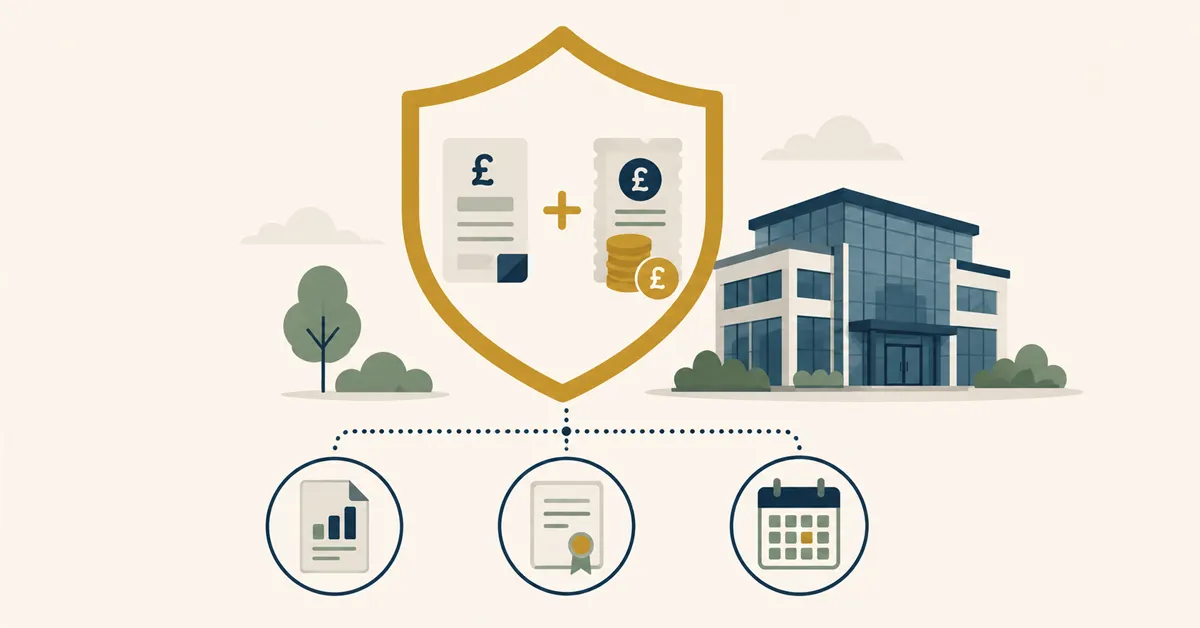
Depending on the insurer and how the policy is structured, executive income protection may be able to take dividends into account alongside salary when assessing how much cover is available, though this should never be assumed across the market.
This is one of the main reasons executive income protection is worth considering for directors paid through a mix of salary and dividends, since personal income protection typically only assesses cover against salary or declared self-employed income.
If your remuneration is structured with a modest salary and the rest taken as dividends, as is common for many owner-managed limited companies, a personal policy may leave a significant part of your actual income unprotected.
That said, not every insurer treats dividends in the same way, and the proportion of your total income that can be reflected in your cover will vary.
This is exactly the kind of detail that should be checked with an adviser and confirmed by the insurer at application stage, rather than assumed from general guidance.
Why are dividends treated differently to salary by insurers?
Salary is generally straightforward for an insurer to assess, since it is a fixed, contracted, and predictable form of income. Dividends work differently.
Dividends are paid out of company profits, are not guaranteed, and can vary significantly from year to year depending on how the business performs.
Because of this, insurers typically want more evidence before including dividend income in a cover assessment, and may look at your dividend history over a period of time rather than a single year’s figure, to get a more realistic picture of what you actually rely on.
This is a sensible approach from the insurer’s perspective, but it also means the process of arranging executive income protection can involve more paperwork and discussion for director-shareholders than it would for someone paid a fixed salary alone.
What evidence will an insurer typically want to see?
Insurers generally want to build a clear picture of your total income before agreeing how much of it can be reflected in your cover. Commonly requested evidence includes:
- Recent P60s, to confirm your PAYE salary
- Dividend vouchers, to evidence the dividend income you have actually drawn
- Company accounts, to demonstrate the business’s profitability and its ability to sustain dividend payments
- HMRC tax calculations or self-assessment documents, to provide a fuller picture of your declared income
Exactly what is required, and how far back the insurer wants to look, will vary by provider and by your individual circumstances.
Having this information organised in advance can help the application process move more smoothly, but it should not be assumed that every insurer requires the same documents or reaches the same conclusion from them.
What if my dividend income varies from year to year?
This is a genuine and common concern, particularly for directors whose company’s profitability fluctuates, or who have only recently started taking dividends.
Insurers typically look at your dividend history over more than one year where possible, rather than relying solely on your most recent figure, to form a more balanced view of what you can reasonably be considered to rely on.
If your dividends have varied significantly, or your company has only a short trading history, this may affect how much of that income can be reflected in your cover, and it is worth discussing openly with your adviser before applying rather than assuming a worst-case outcome.
If your company is relatively new, or dividend payments have been irregular, it is worth having a conversation about what evidence is realistic to provide and what level of cover may be achievable in your specific circumstances.
Can a spouse or civil partner’s dividends be included?
In some cases, potentially yes, though this depends on the insurer and the specific circumstances involved.
Some policies may allow the loss of a spouse or civil partner’s dividend income to be considered, where that person holds a role in the company that does not generate revenue directly, such as an administrative position.
This is a more specialist area of cover than the core salary-and-dividend assessment for the director being insured, and it should not be assumed to be available or structured in the same way by every insurer.
If this applies to your situation, it is worth raising directly with your adviser at the outset, so it can be explored properly as part of your application.
Is my salary assessed differently to my dividends?
Yes, generally. Your PAYE salary is usually a more straightforward part of the assessment, since it is a fixed, documented figure typically evidenced through payslips or your P60.
Dividends require the additional evidence and historical context described above, because of their less predictable nature.
In practice, this means your overall level of cover is often built up from these different income sources being assessed individually, rather than your total remuneration being treated as a single, uniform figure.
This is one reason working with an adviser who understands how director remuneration works can be genuinely useful, rather than approaching an insurer with a single combined income figure and hoping it is accepted as presented.
A worked example (illustrative only)
As an illustration, consider a director who draws a modest annual salary from their limited company, with the majority of their income taken as dividends drawn from company profits over recent years.
When applying for executive income protection, this director may be asked to provide P60s to confirm the salary element, along with dividend vouchers and company accounts covering more than one year, to evidence the dividend element.
The insurer would then assess both elements, potentially arriving at a combined figure that reflects a proportion of the director’s total income, rather than the salary alone.
This is a simplified, illustrative example only, intended to show how salary and dividends might be assessed together in principle. It is not a description of any actual GWD Finance Limited client, and actual outcomes, evidence requirements, and the proportion of income that can be covered will vary by insurer and individual circumstances.
Who might this matter most for?
The distinction between salary-only and salary-plus-dividend cover is likely to matter most if you:
- Are a limited company director who draws a low salary and takes the majority of your income as dividends
- Have not previously realised that a personal income protection policy may only reflect your salary, not your dividends
- Are reviewing your existing income protection arrangements and want to check whether your dividend income is actually accounted for
- Have a spouse or civil partner whose dividend income from the business would also be affected by your incapacity
Who might this not help, or need something different?
Executive income protection can be a valuable way to reflect a director’s full income, but it will not suit every situation, and it is worth understanding where the limits are.
- If you are a sole trader or in an ordinary partnership, you do not draw dividends in the way a limited company director does, and executive income protection in this form is unlikely to be available to you. Personal income protection, assessed against your self-employed profit, is likely to be the more relevant route.
- If your company has a very short or inconsistent dividend history, it may be harder for an insurer to reflect that income fully, at least initially, and this should be discussed openly with your adviser rather than assumed to work in your favour.
- If you would prefer simpler, personally owned cover, and are comfortable with it being based on salary alone, personal income protection may still be a reasonable option, particularly if dividends make up a smaller part of your income.
- If your dividend income depends heavily on decisions outside your control, such as a co-director’s dividend policy, it is worth being realistic about how an insurer may view that income when assessing cover.
This is not an exhaustive list, and every application will be assessed on its own circumstances by the insurer involved.
Key questions to ask before applying
- Roughly what proportion of my total income comes from salary, and what proportion from dividends?
- Do I have accessible records of my dividend history, such as vouchers and company accounts, going back more than one year?
- Has my dividend income been broadly consistent, or has it varied significantly?
- Does my spouse or civil partner hold a role in the business, and could their dividend income also be relevant to consider?
- Have I discussed my specific circumstances with an adviser before assuming what level of cover might be achievable?
FAQs
Do all insurers treat dividends the same way?
No. How dividends are assessed, what evidence is required, and how much of that income can be reflected in cover varies between insurers. This should always be checked directly rather than assumed from general guidance.
What if my company hasn’t paid dividends for very long?
This may affect how much of your dividend income an insurer is comfortable reflecting in your cover, since most will want to see a reasonable history to assess consistency. It is worth discussing your specific situation with an adviser before applying.
Are dividends taxed differently to salary if I make a claim?
Tax treatment can depend on how the policy is structured, how the benefit is paid out, and current rules, and this should be checked with an accountant rather than assumed. GWD Finance Limited does not provide tax advice.
Does covering dividends mean I automatically get a higher level of cover than a salary-only policy?
Not automatically. Including dividend income in the assessment may allow a fuller picture of your total remuneration to be reflected, but the actual proportion of income that can be covered depends on the insurer and your individual circumstances, and should never be assumed in advance.
Can I still get executive income protection if my dividends fluctuate significantly year to year?
Potentially, yes, though this may affect how an insurer assesses that portion of your income. It is best discussed directly with an adviser, who can help you understand what evidence to provide and what may be achievable.
Can GWD Finance Limited advise on tax matters?
No. GWD Finance Limited can advise on executive income protection and related protection planning, but does not provide tax advice. Tax treatment should always be checked with an appropriate accountant or tax adviser.
Conclusion: dividends can often be reflected, but the detail matters
For many limited company directors, the appeal of executive income protection lies specifically in its ability to look beyond salary alone.
In many cases, dividends can be taken into account alongside salary, potentially giving a more accurate picture of what a prolonged absence would actually cost you.
But this is not automatic, and it is not identical across every insurer. The evidence required, the treatment of variable dividend income, and the proportion of your total remuneration that can ultimately be reflected all depend on your specific circumstances and the insurer involved.
Getting this right from the outset is where tailored advice makes a genuine difference.
Talk through your executive income protection options confidentially
If you want to understand whether executive income protection could reflect your salary and dividend income as a limited company director, GWD Finance Limited can help you talk it through clearly, discreetly, and with advice tailored to your company, income structure, and priorities.
For a no-obligation, confidential chat, you can:
- Call 020 7971 1416
- Email info@gwdfinance.com
- Complete the contact form below
The information contained within was correct at the time of publication but is subject to change and does not constitute as advice.
