

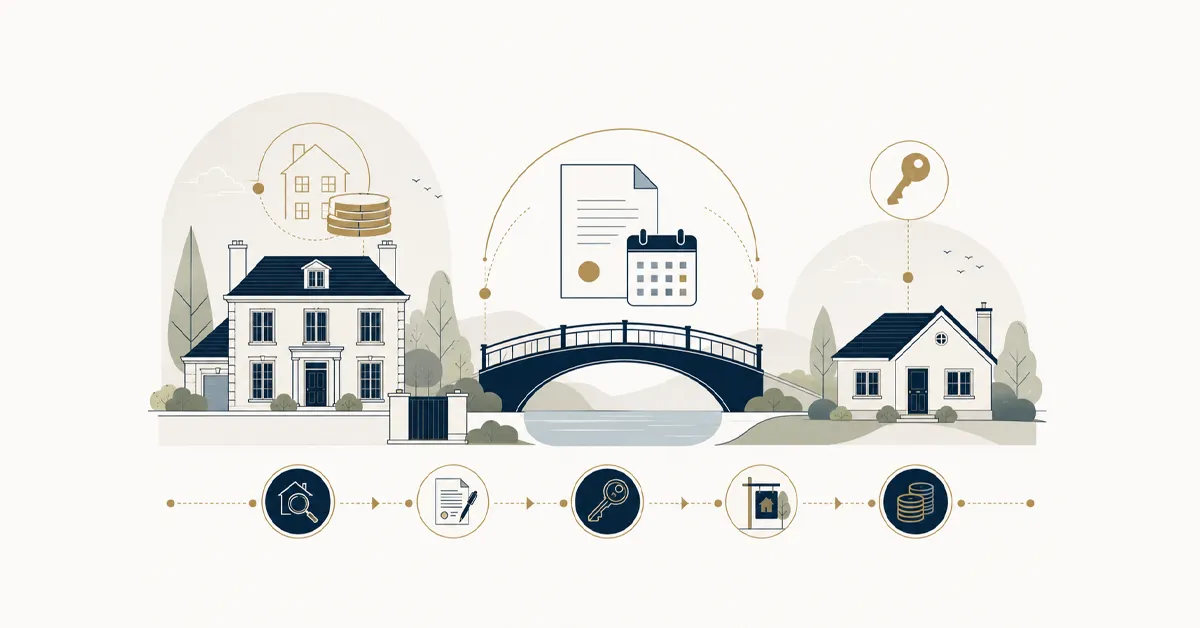
At a glance
- A downsize bridging loan is short-term finance designed to help you buy your next home before your current one has sold.
- It can help bridge the timing gap between your onward purchase and the sale of your existing property.
- In many cases, lenders will look closely at the properties involved, the equity available, and the exit strategy.
- A clear and realistic repayment plan is important, particularly as bridging is intended to be short term.
- Bridging can be useful for some downsizers, including retired or semi-retired homeowners, but it will not suit every move.
- Costs are usually higher than a standard residential mortgage, so it is important to weigh the benefits against the risks.
For many homeowners planning a move later in life, one practical question comes up very quickly: how does a downsize bridging loan work when you want to buy before you sell?
It is a very understandable concern. You may have found the right next home, but your current property has not yet sold. You may want to avoid rushing your sale, breaking your chain, or missing out on the property you really want.
In those circumstances, a downsize bridging loan may help you buy your new home before your current one is sold.
In simple terms, bridging finance is short-term property finance. In the right circumstances, it can allow you to complete on your next purchase first, then repay the loan when your existing property is sold.
That can be especially relevant for downsizers who have substantial equity tied up in their current home but want more flexibility around timing.
In this guide, we explain how a downsize bridging loan works, why some homeowners use one when they want to buy before they sell, what lenders are usually looking at, and the risks and limitations to understand before going ahead.
What is a downsize bridging loan?
A downsize bridging loan is a short-term loan designed to help you buy a smaller home before your existing property has sold.
It is commonly used by homeowners who want to move first, then sell their current property in a more measured way. Rather than waiting for your sale to complete before you can buy, a bridging loan can help fund the purchase in the meantime.
Once your existing property is sold, the bridging loan is usually repaid from the sale proceeds.
This can be particularly useful if:
- You have found the right next property and do not want to lose it
- Your current home is taking longer than expected to sell
- You do not want to accept a lower offer simply to keep your move on track
- Most of your wealth is tied up in your current home
- A standard mortgage may not be the best fit for your circumstances
For many downsizers, the challenge is not a lack of overall wealth. It is that the money they need for the next purchase is still tied up in their current property at the point they need to move.
How does a downsize bridging loan work in practice?
The easiest way to understand how a downsize bridging loan works is to look at it step by step.
1. You find the property you want to buy
This is often where the timing issue begins.
You may have found the home you want to move to, but your current property is not yet sold. If you wait, you may risk losing the purchase. If you move too quickly, you may feel pressure to accept a lower offer on your existing home.
A buy before you sell bridging loan is designed to help solve that short-term gap.
2. The lender assesses the properties and the case
In many downsize cases, the lender will look closely at the value of your current residence and the property you want to buy.
They will also want to understand the amount you need to borrow, the level of equity available, and how the loan is intended to be repaid.
That is one reason the overall structure of the case matters. Even where bridging is more asset-based than a standard mortgage, the lender will still want a sensible and realistic repayment plan.
3. The bridging loan completes so you can buy before selling
If the case is acceptable and the finance completes, you can use the bridging loan to complete on your new property before your current home has sold.
This is the key practical benefit: it can allow you to secure the next home without waiting for your existing sale to catch up.
4. You move into the new property
Once the purchase completes, you can move into your new home and focus on selling your current property.
For many downsizers, this can reduce stress. You may have more breathing space to market your home properly, make practical arrangements for the move, and avoid feeling forced into a rushed sale.
5. Your current home is sold
In a typical downsize case, your existing property is then sold during the bridging term.
The sale of that property is usually central to the repayment plan. This is often referred to as the bridging loan exit strategy.
6. The bridging loan is repaid
Once your current property sale completes, the bridging loan is repaid from the sale proceeds, along with any interest, fees, and other agreed costs.
Why do some downsizers use bridging instead of a standard mortgage?
For some homeowners, the main issue is not whether they can afford a long-term loan in theory. It is that the timing of their sale and purchase does not line up neatly.
A standard mortgage may not always be the best fit if:
- You want to buy before you sell
- You are retired or have lower income than a mainstream lender would usually want to see
- You do not want a long-term borrowing commitment
- Your next purchase needs to move quickly
- You want to avoid pressure on the sale of your current home
Buy before you sell
This is often the main attraction. If you have found the right property, a buy before you sell bridging loan can help you secure it before your current home has sold.
Avoid pressure on your sale
Without bridging, some downsizers feel forced to accept a lower offer simply to keep the chain together. A bridge can reduce that pressure and allow you to sell in a more measured way.
Use the strength of your assets
For many older homeowners, their strongest financial position sits in property equity rather than monthly income. Bridging can sometimes reflect that more naturally than a standard mortgage.
Greater flexibility for more complex cases
Where retirement, unusual income patterns, time sensitivity, or discretion are part of the picture, bridging may offer a more practical route in the right circumstances.
What do lenders usually look at?
Although every lender and every case is different, there are some common factors that will usually matter.
The value of the properties
Because bridging is often asset-based, the lender will usually look closely at the value of both your current residence and the property you want to buy.
The level of equity available
A strong equity position can be important in a downsize bridging case. It can influence how the loan is structured and how comfortable a lender is with the overall arrangement.
The exit strategy
In most downsize cases, the plan will be to repay the bridging loan when your current home is sold. The lender will want to understand how that plan is expected to work and whether it appears realistic.
The likely timescale
Bridging is intended as short-term finance. That means the expected timeframe for your sale and repayment matters.
The overall logic of the situation
As with any lending, the structure needs to make practical sense. The loan should solve a genuine timing issue rather than create unnecessary risk or cost where a simpler route would be better.
If you want to explore the income side in more detail, you can also read our guide: Does income matter for a downsize bridging loan?
What are the risks and limitations if you buy before you sell?
Before taking a downsize bridging loan, it is important to understand the risks and limitations as well as the potential benefits.
It is short-term finance
Bridging is designed to solve a temporary timing issue rather than provide a long-term borrowing solution.
Costs are usually higher than a standard mortgage
Bridging finance is usually more expensive than a long-term residential mortgage. Interest rates, arrangement fees, and other costs may be higher, so these need to be weighed carefully against the benefit of securing your move.
Existing commitments may still matter
Even where the bridging loan is structured around the properties involved, you may still have existing mortgage payments or other financial commitments to maintain. That is one reason the wider circumstances still need to be considered carefully.
The exit plan matters
In most cases, the plan is to repay the loan when your current home is sold. That strategy needs to be realistic from the outset, because delays can increase costs and create pressure.
Delays can create risk
If your existing property takes longer to sell than expected, the loan may need to run for longer than planned. That can affect the overall cost and may mean the original repayment plan needs to be reviewed.
Bridging may not suit every move
Not every case is the same. The property, the level of equity, the likely sale timescale, and the lender’s appetite can all affect what may be available. For some borrowers, a standard mortgage or another funding route may be more suitable.
What happens if your home does not sell quickly enough?
This is one of the biggest concerns for downsizers considering a bridge.
If your current property does not sell as quickly as expected, the bridging loan may run for longer than planned, which can increase cost and create additional pressure.
In some circumstances, a lender may consider an extension, but this should never be assumed from the outset. The possibility of any extension will usually depend on the circumstances, including how the property is being marketed, whether there is buyer interest, and whether the lender remains comfortable with the overall case.
That is why it is important to go into the loan with a realistic sale strategy and a properly thought-through exit plan from the start.
Who might this approach suit?
A downsize bridging loan may be worth exploring if you are:
- Moving to a smaller home and want to complete before selling your current property
- Retired or approaching retirement
- Keen to avoid a rushed sale
- Buying in a competitive market where timing matters
- Looking for short-term flexibility while your existing property is sold
- In a position where more of your financial strength sits in your property equity than in immediately available income
This can make bridging for downsizing particularly relevant for older homeowners who want to move first and sell afterwards.
Who might this approach be less suitable for?
A downsize bridging loan may be less suitable if you:
- Need a long-term borrowing solution rather than short-term finance
- Do not have a clear or realistic plan to repay the loan
- Would struggle with the higher costs associated with bridging finance
- Do not want to take on the risk of delays in selling your current property
- May be better served by a standard mortgage or another simpler funding route
This is one reason tailored advice matters: a bridging loan can be very useful in the right case, but it should still be the right fit for the move, the borrower, and the overall plan.
How can GWD Finance help?
At GWD Finance, we help clients assess whether a downsize bridging loan may be suitable for their circumstances and how the case might best be structured.
Where the situation involves retirement, lower income, a time-sensitive purchase, or a desire to buy before you sell, experienced guidance can help bring clarity to what may be possible.
We take a bespoke, discreet approach and help clients understand:
- Whether bridging is likely to suit the move they are planning
- How the case may need to be structured
- What lenders may focus on
- What needs careful thought before proceeding
- How the process is likely to unfold from enquiry to completion
Because every move is different, tailored advice is especially important where the case is more complex or where timing matters.
You can also explore our Downsize Bridging Loan page for more information about the service and how we help clients navigate these situations.
Frequently asked questions
Can I buy before I sell when downsizing?
Potentially, yes. In the right circumstances, a downsize bridging loan can help you complete on your next home before your current one is sold.
How is a downsize bridging loan repaid?
In many cases, the loan is repaid from the sale of your current home. That is why the exit strategy is such an important part of the case.
Can retired homeowners use a downsize bridging loan?
Potentially, yes. This can be particularly relevant for retired or semi-retired homeowners with substantial equity who want to move before selling, especially where a standard mortgage may not be the best fit.
Is a bridging loan more expensive than a mortgage?
Bridging finance is usually more expensive than a long-term residential mortgage. Interest rates, fees, and other costs should always be considered carefully before proceeding.
How quickly can a downsize bridging loan be arranged?
Timescales vary depending on the lender, the properties involved, and how straightforward the case is. Every case should be assessed individually.
Conclusion: how downsize bridging can help you buy before you sell
So, how does a downsize bridging loan work when you want to buy before you sell?
In simple terms, it is short-term finance designed to help bridge the gap between buying your next home and selling your current one. In the right circumstances, it can give downsizers more flexibility, reduce pressure on the sale, and help secure the property they want to move to.
The key is to make sure the case is structured sensibly, the risks and costs are understood, and the repayment strategy is realistic from the outset.
Talk through your downsize bridging options confidentially
If you are considering a move and want to understand whether a downsize bridging loan could work for your circumstances, GWD Finance can help you talk it through clearly, discreetly, and on a tailored basis.
For a no-obligation, confidential chat, you can:
- Call 020 7971 1416
- Email info@gwdfinance.com
- Complete the contact form below
The information contained within was correct at the time of publication but is subject to change and does not constitute as advice.
